

Le vasche delle meduse
Species present in the tank
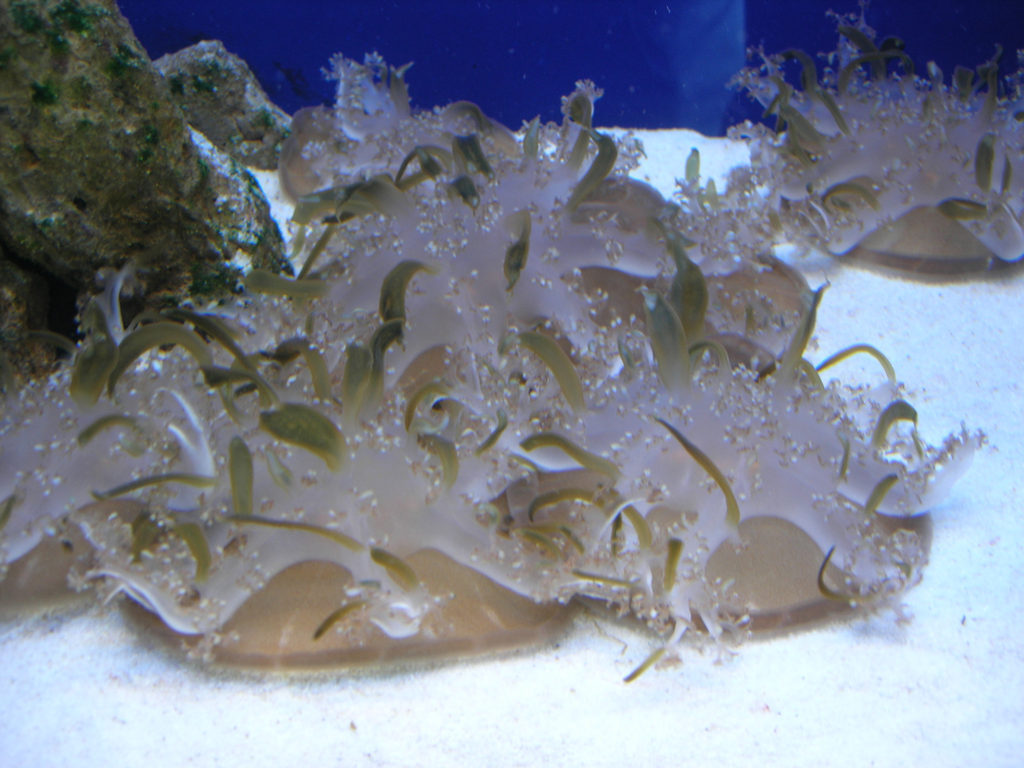
Upside-down jellyfish
Size: up to 30 cm
Habitat and distribution: globally distributed in tropical marine shallow waters on sandy and muddy bottoms.
This jellyfish sits on the bottom upside-down to provide sunlight to the symbiotic algae, called zooxanthellae, hosted in the tissues of their tentacles. Zooxanthellae use sunlight to photosynthesize and produce sugars that are passed on to the jellyfish. The upside down jellyfish was first recorded in the Mediterranean in 1903, where it arrived from the Red Sea through the Suez Canal. Today it is found in the Eastern basin but its population are expected to grow thanks to the raising sea temperature due to climate change. As a potentially invasive alien species, which represent one of the main threats to biodiversity, its presence in the Mediterranean has to be monitored.
IUCN Status: Alien Species
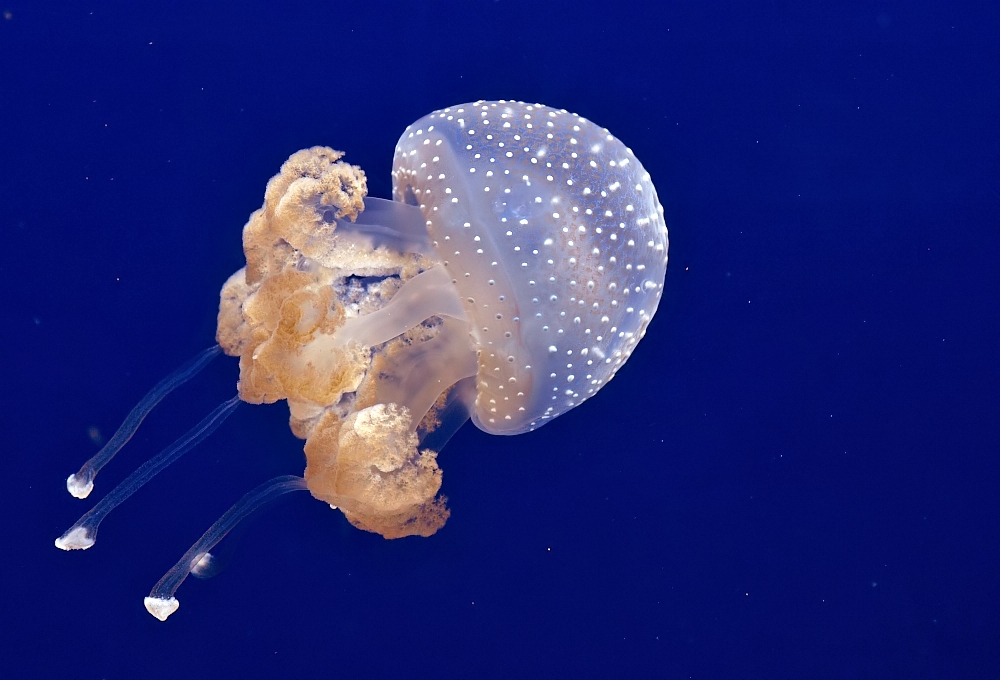
White spotted jellyfish or Australian spotted jellyfish
Size: bell up to 50 cm wide
Habitat and distribution: native to the West pacific from Japan to Australia, leaves near to the coastline in warm temperate seas.
White-spotted jellyfish have only a mild venom that allows them to prey only on tiny animals, so their main source of food is zooplankton. They have become invasive spreading globally, probably introduced with ship’s ballast waters that were subsequently dumped . Normally they travel in large groups, consuming all of the zooplankton in the area, thus reducing its availability for other organisms that rely on plankton as food source, with heavy impacts on local ecosystems. Moreover, this alien species threatens commercial fisheries as it preys on eggs and larvae of commercially important shrimps, crabs and fish and causes millions of euros of economic loss damaging fishing gears. The Australian jelly has recently spread into the Mediterranean and has been recently observed in Sardinian waters.
IUCN Status: Invasive Alien Species
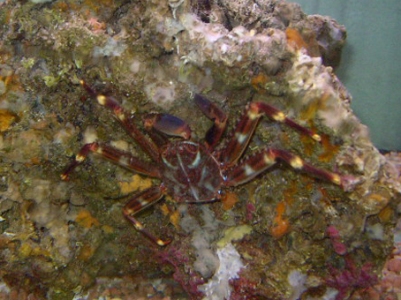
Percnon gibbesi
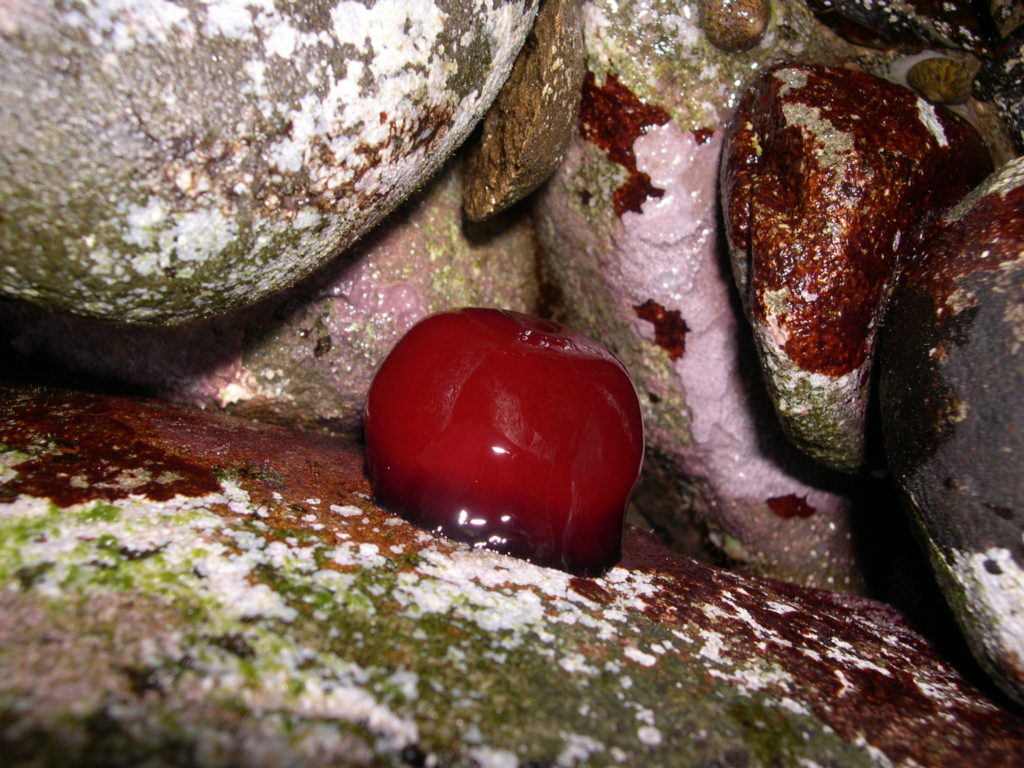
Sea tomato
Size: 3-9 cm
Habitat: cosmopolitan, lives in the intertidal zone of the seas of the temperate area, from the Atlantic to the Indo-Pacific.
Called sea anemone, for its resemblance to a flower when its stinging tentacles are outstretched, is of color from bright red to brownish red. During low tide, it often stays out of the water, taking on the appearance of a small, jelly-like ball.