
I pesci scorpione
Species present in the tank
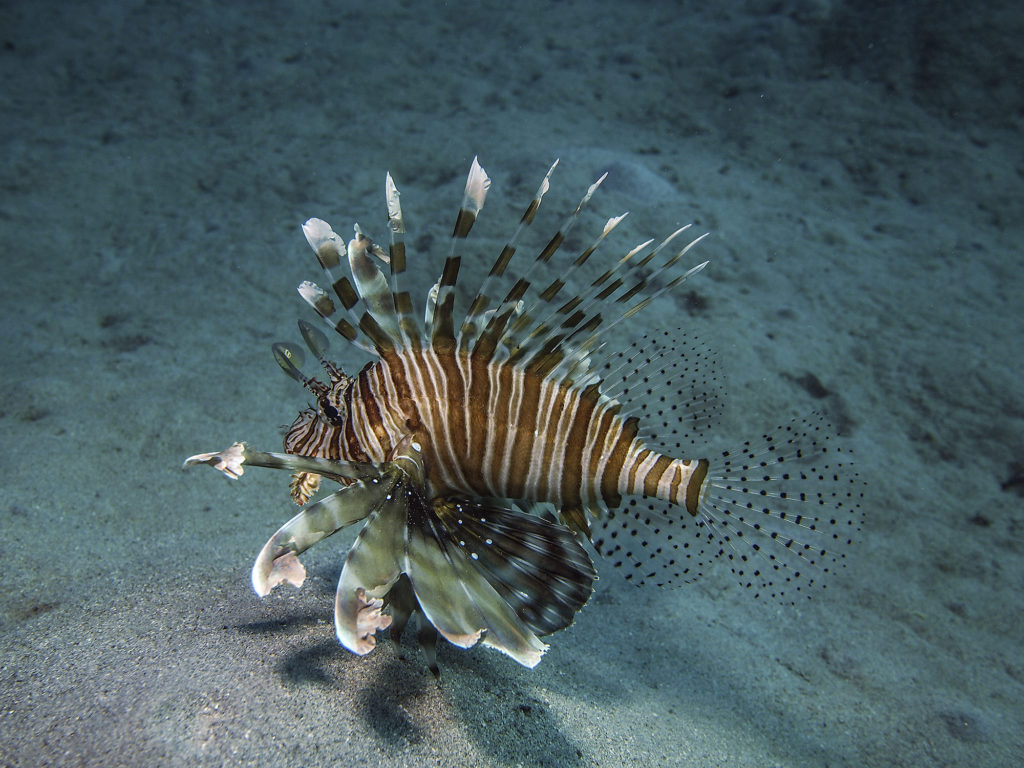
Red Lionfish
Size: max 38 cm. Habitat and distribution: on reefs from 2m down to 55m of the Indo- Pacific Ocean. Often solitary, they hide in unexposed places at daytime, practically immobile, and hunt at night using their widespread pectoral fins to trap prey into a corner, stunning it and then swallowing it in one sweep. Dorsal spines are venomous. This species has become invasive in the Atlantic and has recently reached the Mediterranean. In the new environment, predators seem not to recognize them as prey and ignore them. This, coupled with a prodigious breeding rate (a female can produce two million eggs a year!), make lionfish's numbers are grow at a startling rate at the expense of local fish stocks. So far, catching them for human consumption seem to be the only tactic that has had any impact on their populations.
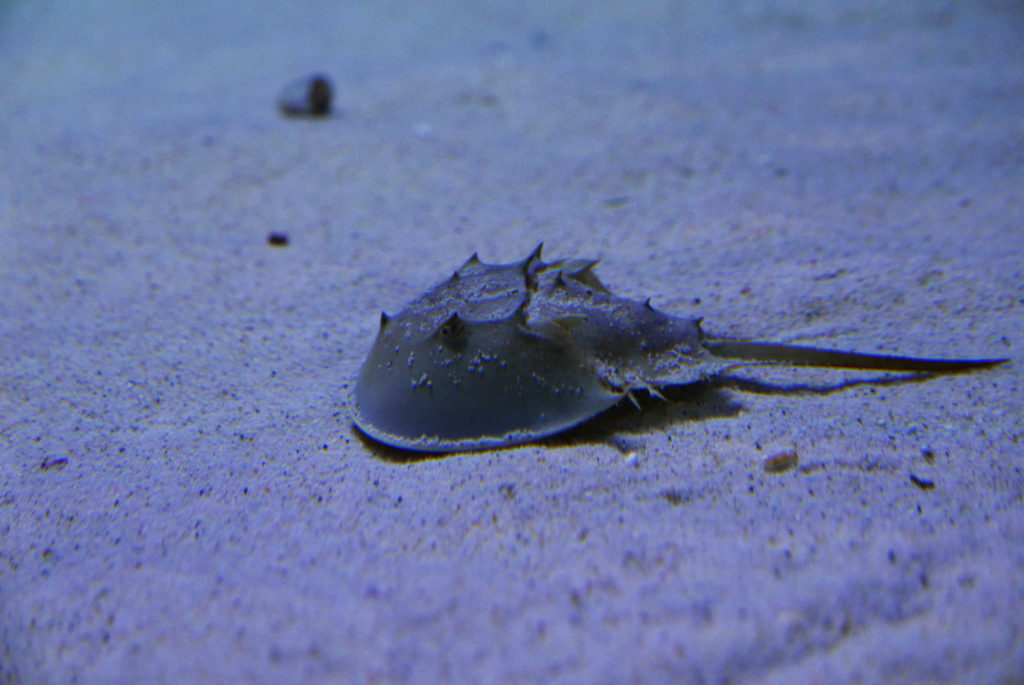
Horseshoe Crab
Size: max 60 cm. Distribution: Northern Atlantic coast between Georgia and Gulf of Mexico. Horseshoe crabs resemble crustaceans but belong to a different group, Chelicerata, which are more closely related to arachnids, like spiders and scorpions. They are often referred to as "living fossils" because they have changed little since their appearance. Forms almost identical to the modern horseshoe crab were already present 230.000.000 years ago. Horseshoe crabs commonly bury themselves in the sand and occasionally will turn onto their back and swim upside-down, using their book-like gills as propellers. They are thought to live up to 40 years.
Limulo